From Granada to Seville: Five Charismatic Neighborhoods You Won't Want to Miss

From Seville to Granada, passing through Cádiz, Andalusia boasts numerous neighborhoods where time appears frozen. With their narrow cobblestone lanes, white-washed homes, floral-filled courtyards, and remnants of Islamic culture alongside vibrant plazas, these cities showcase a blend of Muslim legacy, Jewish impact, and traditional Andalusian customs, offering distinct allure at every turn! Join us as we explore this captivating journey.
The Albaicín, a vantage point overlooking the Alhambra, Granada
On the heights of Granada In Albaicín, you can travel back through time. As the former medina of Granada during the reign of the Nasrid Empire, this ancient quarter consists of winding lanes filled with remnants from its Moorish past: intricately decorated doorways, spiked entryways, and residences centered around lush courtyards. Elevated spots along the slope provide stunning vistas overlooking the area. Alhambra , especially when viewed from the renowned Mirador de San Nicolás during sunset, as the fortress contrasts sharply against the backdrop of the Sierra Nevada. This neighborhood is also central to Granada’s cultural scene, featuring numerous tapas bars and vibrant local attractions. teterías Where you can savor a glass of Moroccan tea, browse through craft stalls, and experience ancient Arabian baths, remnants of a lost heritage.
Santa Cruz, Seville's charming labyrinth of streets
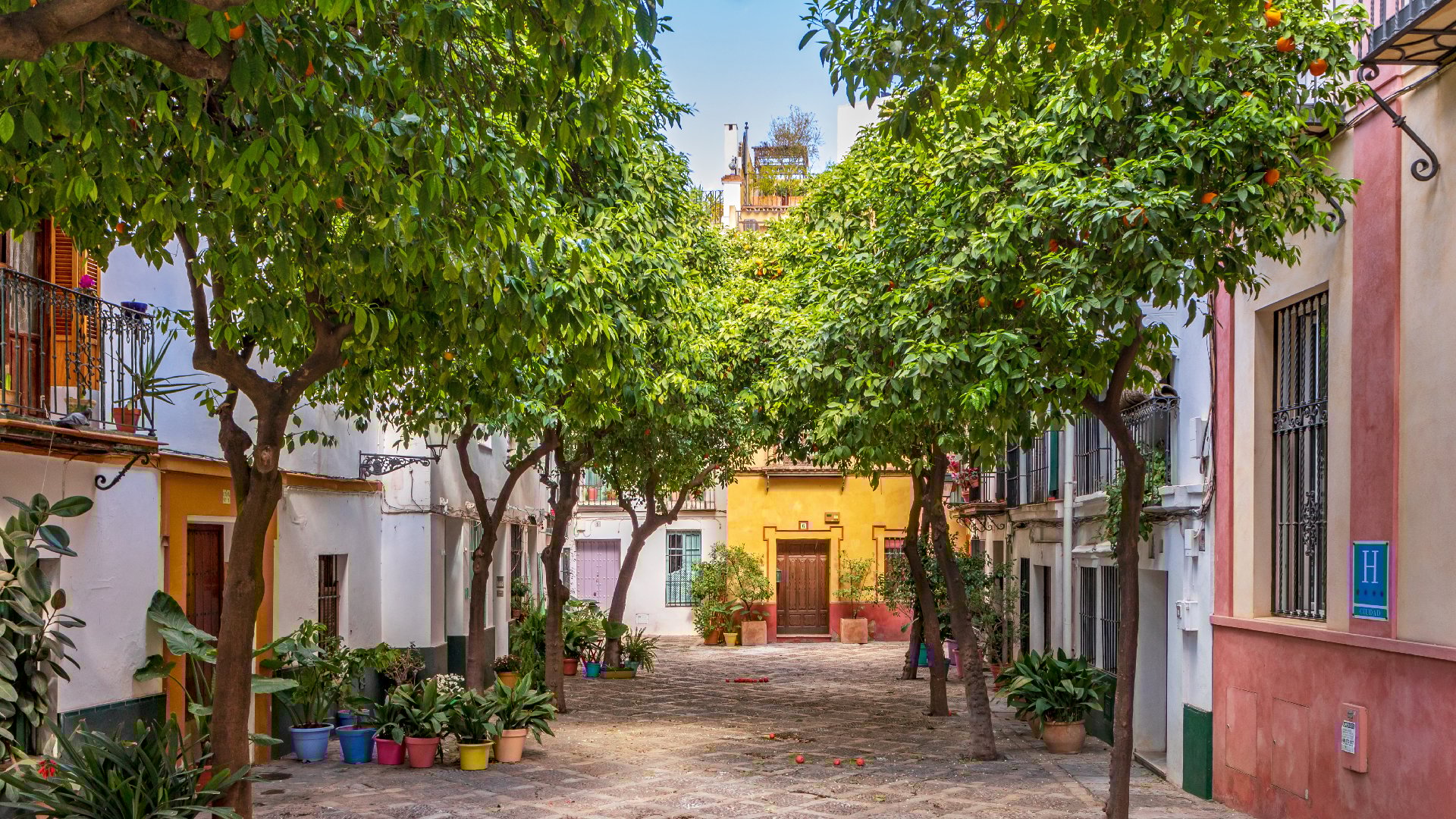
The former Jewish quarter of Seville, known as Santa Cruz, offers the quintessential postcard image of Andalusia. Nestled at the foot of Sevilla Cathedral—formerly known as the Notre-Dame Cathedral—it presents a picturesque scene. Alcázar Its narrow lanes meander through tree-shaded plazas, balconies bursting with flowers, and courtyards adorned with azulejos. The atmosphere here is relaxed and carefree, gently swayed by the fragrance of orange blossoms and the faint strains of flamenco music. Plaza de Doña Elvira stands out as perhaps the most quintessential or well-known spot, featuring orange groves and brightly colored traditional Andalusian homes. As night falls, head to the terraces for some tapas and a glass of manzanilla, all while catching spontaneous performances from flamenco artists.
The Jewish Quarter of Cordoba, a living testament to al-Andalus
A vestige of medieval Cordoba , the Jewish quarter recalls the golden era of Andalusia, when the city gleamed on the Iberian Peninsula. The Judería housed intellectuals and scholars like those from the 12th century. th - century philosopher Moses Maimonides, with the narrow cobblestone lanes and white-washed walls in this area serving as enduring testaments to that period. As you round a bend, you'll notice the 14 th -a century-old synagogue, among the scant few still standing in Spain. Continuing onward, you'll find the Calleja de las Flores – a slender pathway decorated with pots of flowers – which truly embodies its translation as "flower alley." However, the predominant feature remains unquestionably the Mezquita-Catedral ; within its tawny walls unfolds a vast realm of pillars and crescent-shaped arches, a remarkable blend of Islamic and Christian traditions. The district of La Judería also houses Córdoba’s renowned patios: during May, these doors swing open to expose a riotous display of bougainvillea, geraniums, and various spring blossoms. This fleeting show turns the Judería into a magical oasis.
The Barrio del Pópulo, the face of Cadiz overlooking the Mediterranean, tells its story.
Overlooking the Bay of Cádiz, the Barrio del Pópulo is the most ancient section of the city. Cadiz Situated on a slender strip of land during the Middle Ages, this place has been inhabited since ancient times and holds remnants from all eras of documented history, ranging from the Almohad walls to the refined bourgeois homes that reflect the city’s economic success in the 18th century. th The century-old area between the cathedral and the port features three grand archways—the Arco del Pópulo, Arco de la Rosa, and Arco de los Blancos—which serve as gatekeepers, standing quietly amidst these historic medieval defenses. However, El Pópulo holds secrets far more ancient; buried under its stones lies evidence of an old Roman theater dating back to the first centuries AD. st In the century BC, this site stands as one of the most ancient in Hispania. It offers a historical narrative steeped in an undeniable allure.
The Historic Center of Málaga, with a millennium of history nestled beneath the Alcazaba.
Dominated by the Alcazaba , a fortress painted in shades of ochre that resembles a scaled-down version of the Alhambra, Málaga's Centro Histórico carries the legacy of the ancient Medina through its narrow alleyways and shaded plazas. The Roman theater, nestled below the Alcazaba, serves as a testament to the city's significance during the Roman Empire era. In contrast, the cathedral—dubbed "La Manquita" due to its incomplete tower—reflects the transition from Renaissance to Baroque architecture. However, this historic district isn’t solely focused on history. Established in 2003, the Picasso Museum honors Malaga’s most famous son. Further west, the bustling Mercado Central in Atarazanas offers a plethora of Andalusian delights such as marinated olives, cold soup (gazpacho), Iberian ham, among others. When evening descends, the ambiance intensifies around Plaza de la Merced, drawing a diverse mix of locals and tourists alike to its vibrant tapas bars and wine cellars.