Nature's Solution: Discover How Mazhar Botanic Garden Combats Cairo's Air Pollution

Referred to as the 'knight of Egyptian cinema' due to his noble demeanor and military history, Ahmed Mazhar—who died in 2002—spent much of his time off-screen engaged in collecting plants.
The garden is currently under the ownership of his son, architect Shehab Mazhar, and in July 2024, it was made accessible to the public—a move that Mazhar states aligns with the traditions set by Egyptian rulers from the early 1900s.
"As a child," states Mazhar, "my grandmother showed me how to grow plants in our backyard garden. She also shared her knowledge of soil enrichment with me." This early interaction helped create a deep emotional bond for him. flowers As he observed the trees growing taller each day.
When I came of age, I harbored a strong wish to devote myself to establishing a distinctive botanical garden, unlike any other in existence. Egypt ,” Mazhar says.
When enlarging his father’s garden, he aimed to emulate the works of contemporary Egyptian architects like Ismail Pasha, who established the Orman Garden in Giza.
What was the process behind the growth of the Mazhar Botanic Garden?
In 1950, Ahmed Mazhar initiated a collection consisting of flower saplings, as well as almond and walnut trees, along with an assortment of roses and fruit varieties. By 1985, he had broadened his scope to incorporate shade-loving plants and exotic botanical specimens.
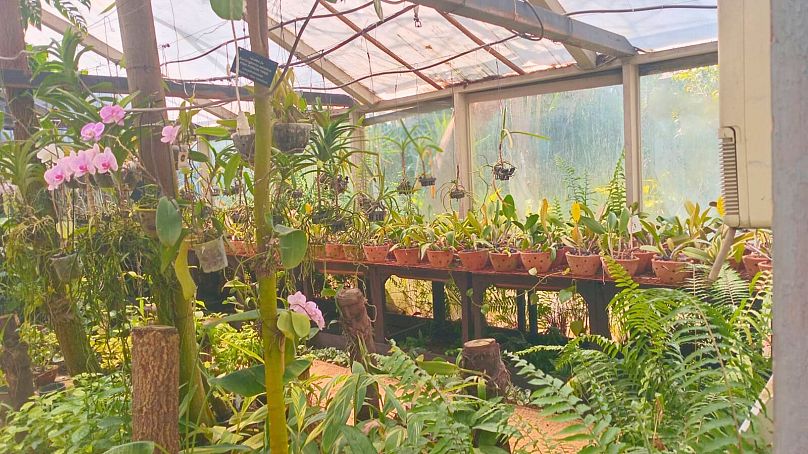
In 2009, Mazhar junior presented a comprehensive range of palm trees. bamboo , orchids, cacti, perennials, houseplants and aquatic flora, ferns along with bulbous species.
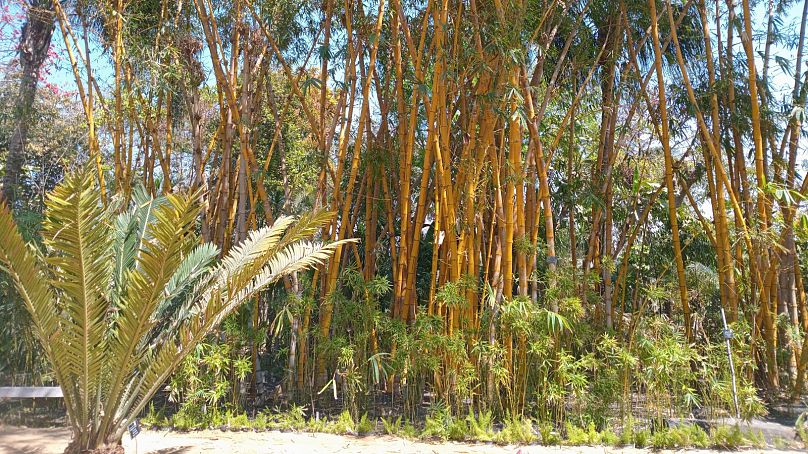
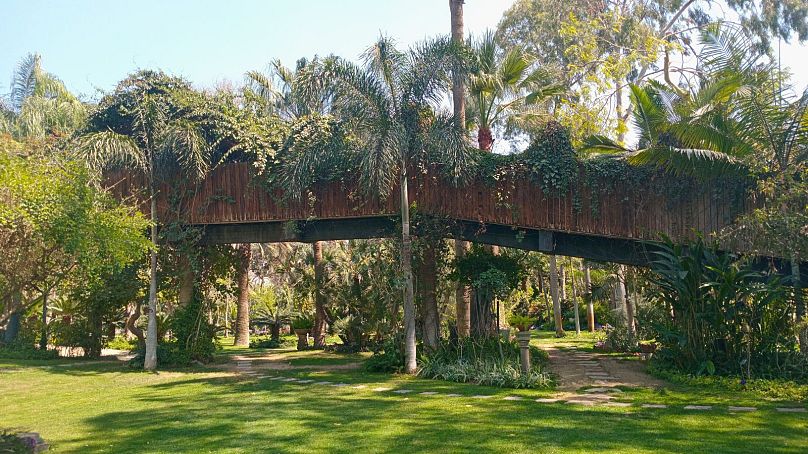
Spanning more than 30 acres in El-Barageel, about 10 kilometers away from downtown Cairo, the garden houses 75,000 unique species of therapeutic and fragrant flora gathered from various international botanical expos.
Its main objective is to safeguard the biggest living assortment of indigenous flora, making the garden an essential destination. accredited In 2017, it was recognized by Botanic Gardens Conservation International (BGCI), making it one of only 15 such locations in the northern African nation. The site additionally serves as a center for scientific research and botanical study.
A verdant oasis for Greater Cairo
Dr. Therese Labib, who specializes in heritage botanical gardens and oversees the Mazhar Botanic Garden, states that the garden is crucial for safeguarding rare and threatened plant species around the world.
Furthermore, the garden helps preserve biodiversity and enhances environmental sustainability through increased carbon dioxide absorption rates,” says Labib.
She asserts that Mazhar Botanic Garden outperforms the Orman Garden in absorbing pollutants, extracting an amount equivalent to four times what the Orman Garden removes from Greater Cairo.
A recent report from Dr. Wafaa Mahrous Amer, a botany professor at Cairo University’s Faculty of Science and a member of the National Committee for UNESCO, indicates that the garden helps sequester approximately 2 million kilograms of carbon dioxide annually.
Adopting plant DNA technology
To boost this essential function, horticulture specialists have implemented a sophisticated system for categorizing the plants based on DNA analysis .
Mazhar has made history as the first botanical garden in Egypt to implement the APG system, which represents a contemporary, DNA-driven approach to categorizing angiosperms or flowering plants.
This technological advancement has enabled precise categorization of plants based on their scientific classification. To offer details regarding each plant’s background, place of origin, and scarcity, QR codes have been incorporated. Up until now, approximately 1,080 different types of plant species have been recorded using this method.
"Like any verdant area, botanic gardens significantly contribute to alleviating the impacts of climate change through their ability to absorb CO2 and decrease temperatures," explains Dr. Hesham Lotfy, who is a professor specializing in plant classification at the Faculty of Education at Ain Shams University.
Nevertheless, he notes, the genuine worth of botanical gardens goes beyond this function, as they are regarded as a "living museum" for flora, safeguarding various plant species. biodiversity of rare ones.
"Mazhar garden significantly enhances air quality in Giza Governorate due to the high density and variety of its plant life," notes Lotfy.
How much carbon can trees absorb?
Dr. Maha Ismail, who leads a forestry and timber tree research center in Cairo, states that the capacity of trees to soak up carbon dioxide depends on various factors.
This encompasses the site where cultivation takes place, the kind of soil involved, as well as the age factor. the tree , growth speed, and the level of carbon in the adjacent atmosphere.
Ismail explains, “Scientists use mathematical formulas to determine how much carbon dioxide is sequestered within a tree.”
A eucalyptus tree that weighs around two tons can store an estimated one ton of carbon dioxide, which is nearly half its mass. Over its lifetime, a 20-year-old eucalyptus tree absorbs roughly 122 kilograms of carbon each year.
Challenges in maintaining botanical gardens in Egypt
Water scarcity In Egypt, according to Dr. Mohamed Mahmoud — who previously served as the director of the Horticultural Research Institute at the Agricultural Research Center — efforts are focused on securing food for the country’s 105-million-strong population, which restricts the development of new botanical gardens due to limited available resources.
“Under the national policy, we plant forest trees that are watered using treated wastewater,” Mahmoud explains to Euronews. "This represents an eco-friendly option compared to traditional gardens. Positioning these forests close to wastewater treatment plants can significantly help decrease carbon emissions and alleviate climate impacts.” climate change .”
Professor Dr. Nader Nour El-Din, who specializes in water resources at Cairo University and works as a consultant for the United Nations' Food and Agriculture Organization (FAO), states that evergreen trees are the most effective at cleansing the air due to their thick foliage and continuous photosynthetic activity throughout the year.
Projects aimed at “greening the desert” do more than just safeguard agricultural lands from turning into deserts; they've turned into a critical strategy for tackling climate issues and enhancing air quality, according to Nour El-Din.
This article is published in cooperation with Egab.