'I Can't Forget': Vietnam Survivor Rebuilds Life After Deadly Landslide Devastates Village

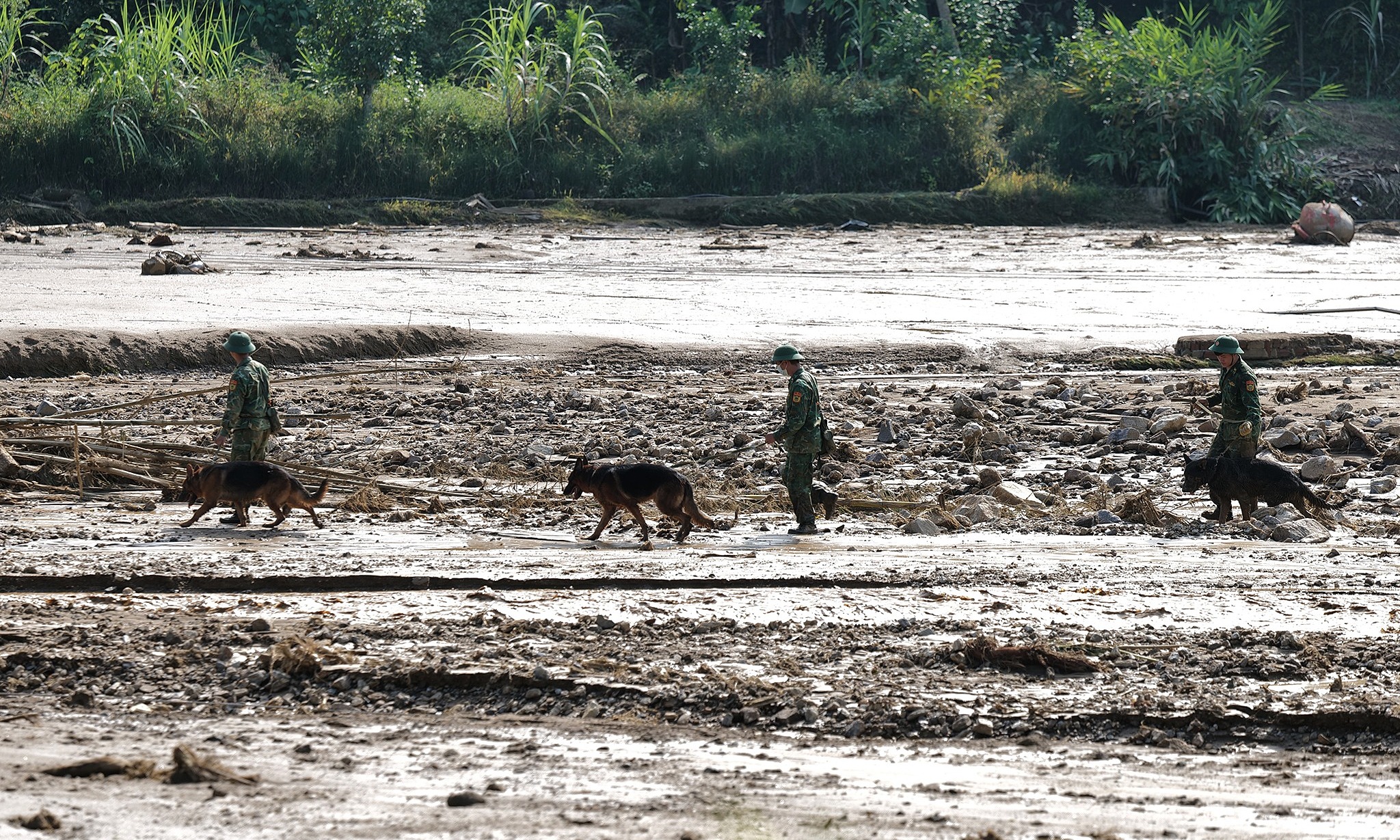
Nguyen Thi Kim's tiny green community in northern Vietnam no longer remains, erased by a landslide caused by the intense rainfall from Typhoon Yagi earlier last year.
She and many other survivors have been moved to a location that officials believe will better endure upcoming climate change-related catastrophes, featuring more robust houses, improved drainage systems, and a smoother landscape that reduces the danger of landslides.
This exemplifies the difficulties faced by global communities as they adapt to climate change, encompassing fiercer rainfall events and sudden flooding similar to what occurred when Typhoon Yagi hit in September.
When Yagi brought heavy rainfall, Kim lost 14 family members along with her customary wooden stilt house as a landslide swept through most of Lang Nu village in the mountainous region of Lao Cai Province.
The storm was the most powerful to strike Vietnam in many years, resulting in at least 320 fatalities within the nation and leading to approximately $1.6 billion in economic damages.
It’s improbable to be an anomaly since studies from last year indicated that climate change is making typhoons in the area strengthen more rapidly and persist for a longer duration over land.
Climate change, primarily driven by the combustion of fossil fuels, affects typhoons in various ways: a hotter atmosphere can hold more moisture, resulting in increased rainfall intensity, and higher ocean temperatures further contribute to the power of tropical cyclones.
Kim continues to be haunted by the memory of the landslide.
She states that everything is agonizing, particularly the recollection of when a flood of mud surged towards her and her two-year-old child.
"This disaster was too big for us all," she said recalling the moment the pair were pulled from the mud hours later.
"The 28-year-old shared, 'I am unable to discuss this without tears. It remains unforgettable,'" she said. AFP .
'We need to change'
Yagi struck Vietnam with wind speeds exceeding 149 kilometers (92 miles) per hour and unleashed heavy rainfall that led to devastating floods in sections of Laos, Thailand, and Myanmar.
In Lang Nu, 67 inhabitants lost their lives, and officials pledged to reconstruct the homes for those who survived at a safer location.
By December, 40 new homes had been completed at a location roughly two kilometers distant.
It was selected due to its height, which ought to be less affected by nearby waterways, along with its fairly mild incline.
"Predicting complete safety in geology is indeed quite challenging," stated Tran Thanh Hai, the dean of Hanoi University of Geology and Mining, who participated in selecting a new location.
However, the website is secure as far as we know and understand.
Lao Cai is among Vietnam’s least economically developed regions, lacking funds for sophisticated alert systems.
Nevertheless, a basic drainage system meanders through the newly developed area, channeling water away from the incline.
This ought to decrease soil saturation and lower the probability of another landslide, according to the scientists who were involved at the location. AFP .
The newly constructed houses in the village are made from stronger concrete instead of the conventional wood.
"Ideally, we should adhere to our customs, yet if safety can no longer be guaranteed, adjustments must be made," Kim remarked, gazing upon the vast area of mud and stone that was once her former village.
Several months have passed since then, yet it still stands motionless, littered with kids' playthings, cooking utensils from the kitchen, and motorcycle helmets all mixed together due to the avalanche.
'Safest ground for us'
Similar to Kim, 41-year-old Hoang Thi Bay also resides in the new village, dwelling in a contemporary stilt house featuring steel support beams.
Her roof, which was originally constructed from palm leaves, has been replaced with corrugated iron, and her doors are now made of aluminum glass.
She clung desperately to a solitary concrete column within her former residence during the landslide, managing to survive as an avalanche of earth and stones engulfed her community.
She mentioned that she still finds herself awake at night, consumed with thoughts about what occurred. AFP .
"The previous house was larger and more beautiful, featuring gardens and fields. However, I now reside in the new house where I feel much more secure," she stated.
Even at the new location, which houses approximately 70 individuals, dangers persist, cautioned Hai.
Changes in the terrain's incline due to development, or the building of dams and reservoirs in the vicinity might increase the likelihood of landslides in the area, according to him.
Constructing additional homes or developing new roadways nearby, as well as removing the protective forest coverage that stabilizes soil, might render the location unstable too, noted Do Minh Duc, a professor from the Institute of Geotechnics and Environment at Vietnam National University in Hanoi.
In Lao Cai, Yagi eliminated extensive sections of established natural forests. Although private enterprises have contributed trees for replanting efforts, their efficacy in offering significant safeguarding remains uncertain.
"In terms of landslide prevention, the only forest that can have good (protective) effects is rainforest with a very high density of trees, so-called primary forest," explained Duc, an expert on disaster risk maps who also helped choose the new site.
It was difficult for Kim to leave the old community, where their family had been living and farming for almost 50 years.
However, she feels thankful that both her and other survivors have been granted another opportunity.
In my view, this is the most secure position for both of us.